

Bathroom falls are more common than many people realize.
For older adults, pregnant women, and people recovering from surgery, simply sitting down or standing up from the toilet can become one of the most challenging moments of the day.
Many homeowners immediately think about installing grab bars.
While grab bars can be effective, they are not always the best solution for every bathroom or every family.
Understanding the differences can help you make a safer and more practical decision.
Why the Toilet Is One of the Highest Fall-Risk Areas
Most bathroom accidents do not happen in the shower.
They happen during simple daily movements.
Standing from a low toilet requires balance, leg strength, and coordination. If any of these are reduced, the risk of losing stability increases.
Common factors include:
- Aging muscles
- Knee pain
- Arthritis
- Pregnancy
- Hip or knee replacement recovery
- Obesity
- Limited mobility
A small loss of balance can quickly become a serious injury.
Preventing falls is often easier than recovering from one.
The Advantages of Traditional Grab Bars
Grab bars have been trusted for decades.
When professionally installed into solid wall studs, they provide reliable support and improve confidence during transfers.
Many hospitals and care facilities use them because they are durable and familiar.
They can be an excellent choice when permanent remodeling is possible.
The Hidden Limitations of Grab Bars
Despite their benefits, grab bars are not ideal for every home.
Many families encounter the same problems.
Installation Can Be Expensive
Proper installation usually requires drilling into tile or drywall.
Incorrect installation may weaken the support or damage the bathroom.
Professional labor also adds to the overall cost.
Rental Homes May Not Allow Them
Many apartments prohibit permanent wall modifications.
This leaves renters with limited safety options.
Support Location Is Fixed
A wall-mounted grab bar only provides assistance where it is installed.
Some users need support directly beside the toilet instead of on the surrounding wall.
Why Toilet Safety Systems Are Becoming More Popular
Toilet safety systems approach the problem differently.
Instead of relying on the wall, they provide support directly around the toilet.
This offers several practical advantages.
Easier Installation
Many systems install using the existing toilet hardware.
No wall drilling is required.
No remodeling is needed.
This makes them suitable for apartments, older homes, and small bathrooms.
Support Where It Is Needed Most
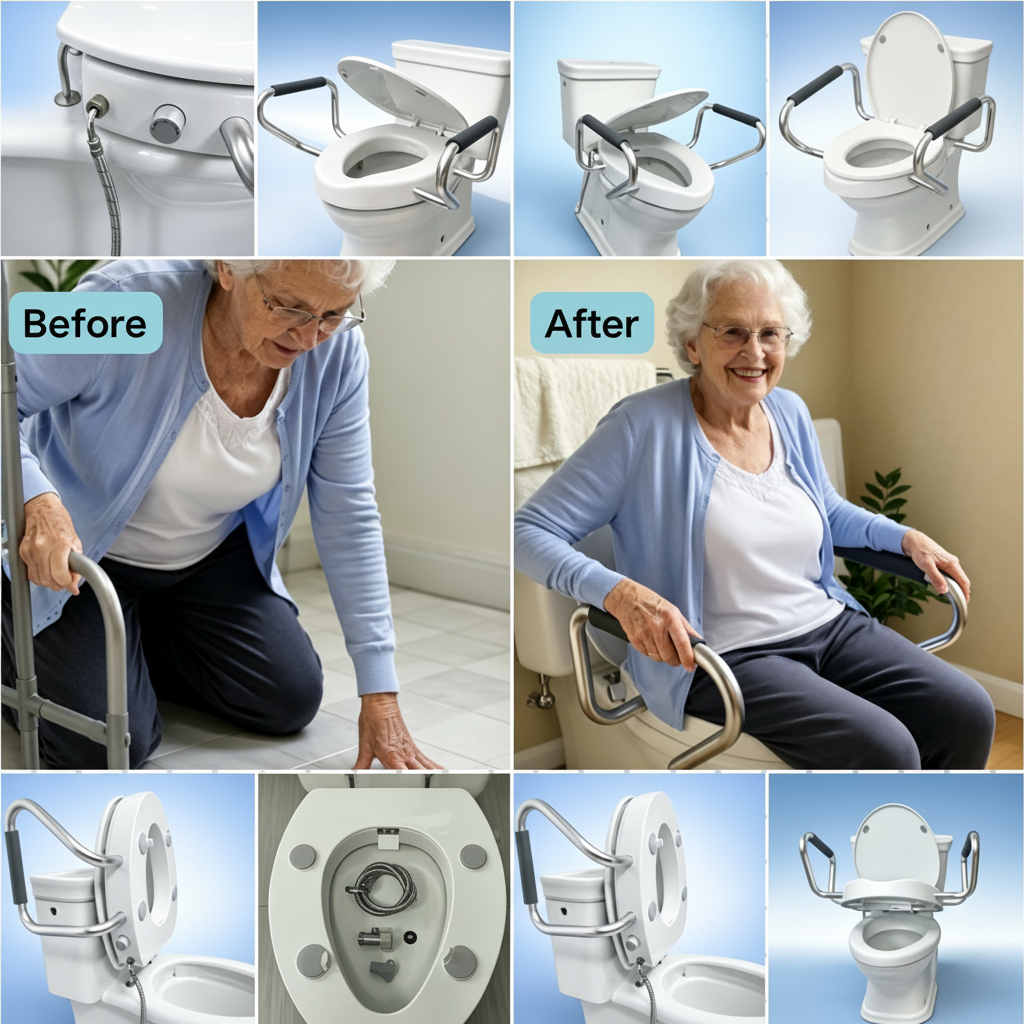
Handles positioned next to the toilet create a more natural movement when sitting down or standing up.
Users can push evenly with both arms instead of reaching sideways.
This often feels more stable and comfortable.
Multiple Functions in One Product
Modern bathroom safety products do more than provide support.
Some combine:
- Safety handles
- Raised seating assistance
- Personal hygiene features
- Everyday comfort
This reduces bathroom clutter while improving independence.
Safety and Hygiene Should Work Together
Bathroom independence is not only about preventing falls.
Many seniors and people with mobility challenges also struggle with personal hygiene.
Reaching and twisting may become painful or impossible.
A bidet can reduce physical strain while improving cleanliness and comfort.
Combining safety support with better hygiene creates a more complete daily solution.
Instead of installing several separate accessories, many families now prefer an integrated system that addresses both needs at once.
One example is the Marine Dana All-in-One Toilet Safety & Hygiene System, which combines sturdy support handles with an integrated bidet and a design focused on accessibility.
Who Can Benefit From a Toilet Safety System?
A toilet safety system may be especially helpful for:
- Older adults wanting to remain independent
- Pregnant women who need extra stability
- People recovering from hip or knee surgery
- Individuals with arthritis
- Caregivers assisting family members
- Anyone experiencing balance or mobility challenges
Small improvements in the bathroom can make everyday routines safer and more comfortable.
Frequently Asked Questions
Are grab bars still a good choice?
Yes.
When installed correctly into structural supports, grab bars provide reliable assistance and remain an excellent safety feature.
Is a toilet safety system easier to install?
Many models attach directly to an existing toilet and require no wall drilling, making installation faster and less invasive.
Can a toilet safety system replace multiple bathroom accessories?
Many integrated designs combine support handles and hygiene features, reducing the need for separate products while saving bathroom space.
Which option is better?
The answer depends on your bathroom layout and personal needs.
For homeowners planning a permanent renovation, grab bars may be appropriate.
For renters, small bathrooms, caregivers, or families seeking a simpler installation, an integrated toilet safety system can offer greater flexibility and convenience.
Final Thoughts
Bathroom safety is about maintaining confidence and independence every day.
The best solution is the one that fits your home, your mobility needs, and your lifestyle.
Whether you choose traditional grab bars or a modern toilet safety system, taking action before a fall occurs is one of the smartest investments you can make for yourself or someone you love.
